Wilderness USA banner
Horseshoe Canyon
- Paul Jones
Looking into Horseshoe Canyon With less than 950 residents, Green River is no metropolis. As we turned off Interstate 70 to make our way south, all I could see were a couple of gas stations and a few houses. I wondered where the rest of the population was hiding.

From Green River we drove about 30 miles south on dirt roads before reaching the Horseshoe Canyon trailhead. The roads in this part of the desert interconnect like a spider web. Without a map, you could easily spend the day lost.

Our two-wheel drive pickup trucks handled the roads just fine, but we had good weather. There were segments of deep, powdery clay that looked like they’d get pretty nasty with a little rain. Even dry, there were a couple of places where we almost got stuck in the deep, talc-like dirt.

Horseshoe Canyon is part of a detached unit of Canyonlands National Park. It was added in 1971 to protect the intriguing rock art found on the canyon walls. Over 2000 years ago Horseshoe Canyon and the surrounding areas were inhabited by the Desert Archaic people, a nomadic group of hunters and gatherers. They left little behind, save for ghostly life-size images scattered across the walls of Horseshoe Canyon. Their artwork is referred to as the Barrier Canyon style. Barrier Canyon rock art is characterized by large, often armless decorated figures with bug-like eyes. The images found in Horseshoe Canyon are considered some of the best in the world.

Looking into the CanyonThe hike into Horseshoe Canyon wasn’t difficult, but I was glad we were going early in the year. Temperatures can be miserably hot in the summer. Besides the weather, another benefit of hiking in the winter is the surprising lack of people. Our isolation intensified the canyon’s haunting atmosphere.

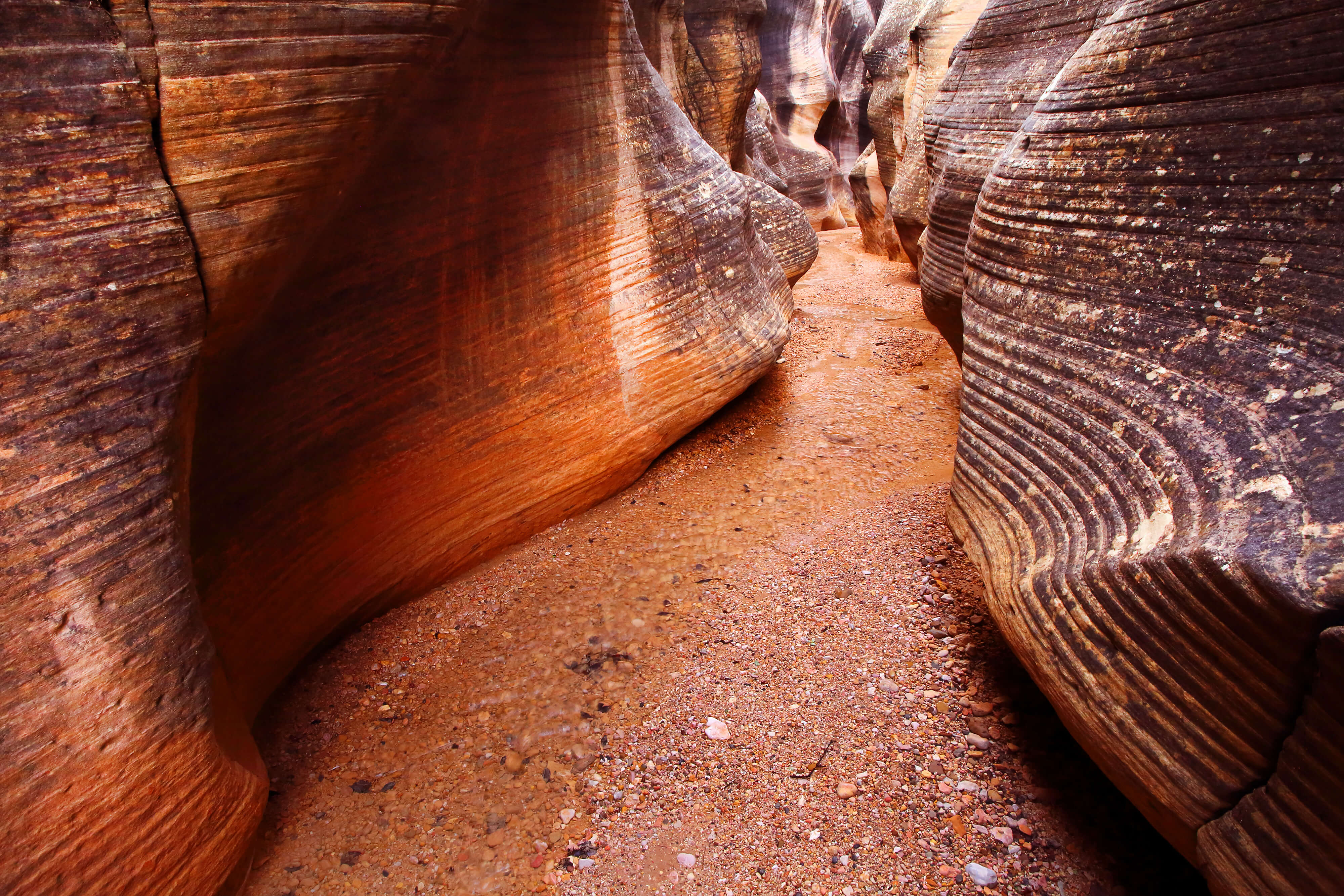
An intermittent stream named Barrier Creek runs down the bottom of Horseshoe Canyon. Flash flood danger is low, but I wouldn’t want to be caught down there during a big rainstorm. Trees near the creek bed had flood-debris piled head-high against their trunks. A few stretches of the river had frozen over. The ice provided a welcome solid surface to walk on. The fine, gritty sand comprising the rest of the canyon floor made for a taxing hike. Of course, walking on the ice proved to be a risky enterprise, since three out of our four group members punched through into thigh-high ice water.

We also found a healthy amount of quicksand, which proved fascinating enough to preoccupy us for a couple of hours. Several inches of dry sand had crusted over the quicksand underneath, so at first glance it appeared to be solid riverbed. The crust was just strong enough to support our weight. However, a little stomping and kneading resulted in a surface that felt something like walking across a giant waterbed.

the Great GalleryQuicksandAfter satisfying our curiosity with the quicksand, we finally arrived at the great gallery, home to Horseshoe Canyon’s largest pictographs. I must admit, they were pretty impressive. The most imposing figure in the group measures about eight feet from head to toe.

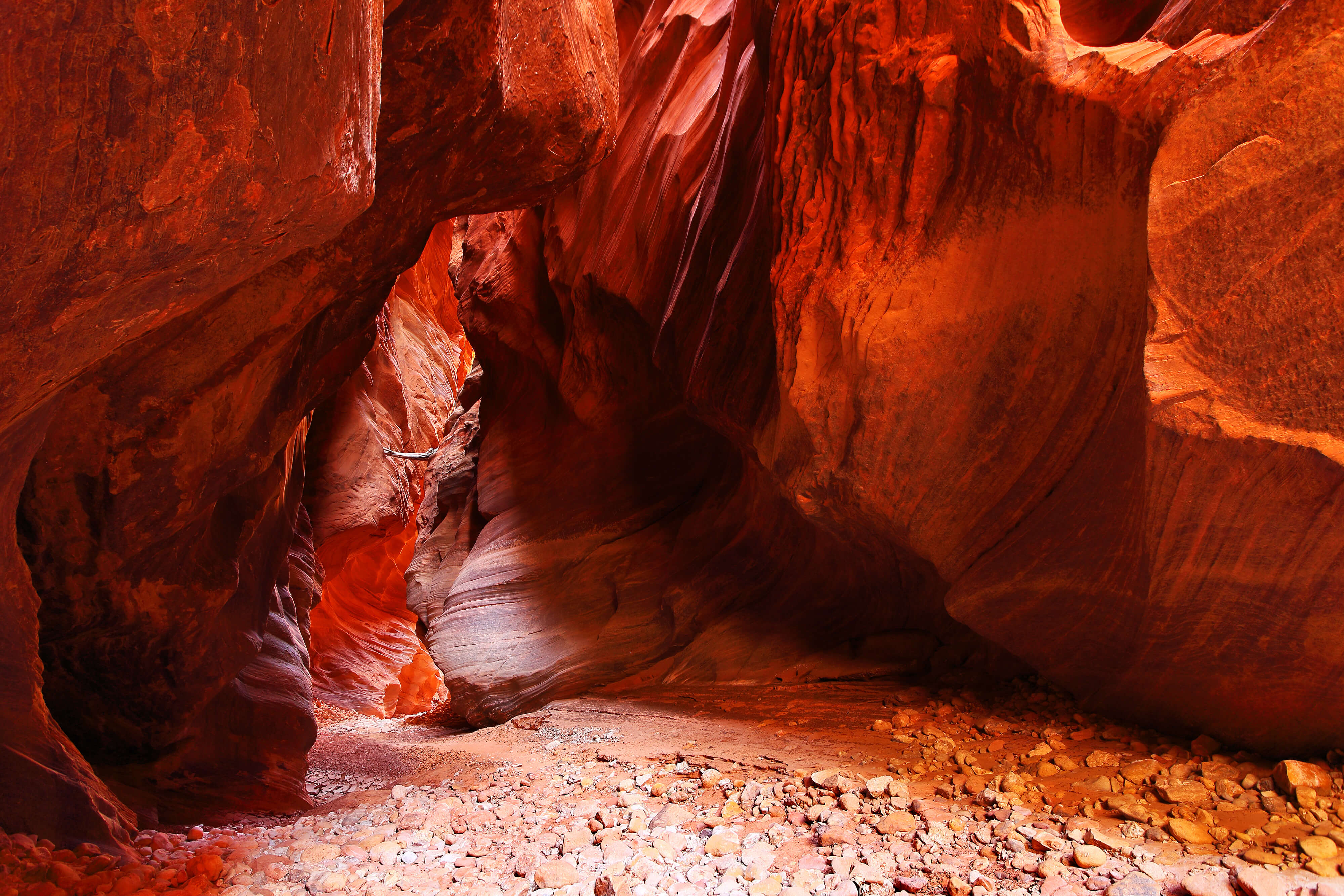
After attempting to absorb the great gallery we hiked a few more miles down to Bluejohn Canyon. There’s something about these canyons that keeps drawing you further in, almost against your will. We couldn't resist the temptation to explore. Upon entering Bluejohn, the canyon walls seemed to swallow us, sucking inwards and upwards.

Unfortunately we didn’t quite make it far enough to peer into upper Bluejohn, the reputedly hairy slot canyon that claimed Aaron Ralston's right arm a few years ago. Daylight began to fail us, and with almost a ten mile walk back to the trailhead, we decided it was time to head back.